

3-Part vs 5-Part Hematology Analyzers: Essential Differences for Medical Facilities
Introduction: Understanding Hematology Analyzer Classifications
When selecting diagnostic equipment for medical laboratories, understanding the distinction between 3-part and 5-part hematology analyzers is crucial for making informed purchasing decisions. These automated blood cell counters serve as fundamental tools for complete blood count (CBC) analysis, but their capabilities differ significantly, impacting diagnostic accuracy, clinical applications, and operational efficiency.
This comprehensive guide examines the technical differences, clinical implications, and cost considerations that healthcare administrators and laboratory managers must evaluate when choosing between these two analyzer categories.
Fundamental Technical Differences Between 3-Part and 5-Part Analyzers
White Blood Cell Differentiation Capabilities
The primary distinction between these analyzer types lies in their white blood cell (WBC) differential counting capabilities:
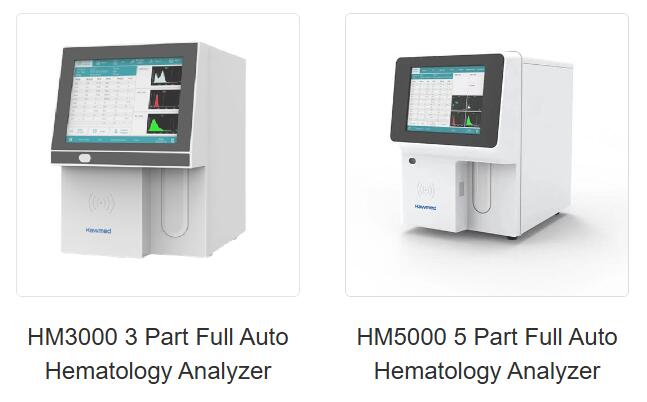
3-Part Hematology Analyzers categorize white blood cells into three primary groups:
• Neutrophils: The most abundant WBCs that fight bacterial infections
• Lymphocytes: Essential for viral immunity and immune system coordination
• Monocytes: Large phagocytic cells that remove dead tissue and fight infection
5-Part Hematology Analyzers provide comprehensive differentiation by identifying five distinct WBC types:
• Neutrophils: Bacterial infection fighters
• Lymphocytes: Viral immunity specialists
• Monocytes: Tissue cleaning phagocytes
• Eosinophils: Associated with allergic reactions and parasitic infections
• Basophils: Involved in allergic responses and inflammation processes
Measurement Methodology Differences
3-part analyzers typically employ impedance technology (Coulter principle) for cell counting and sizing, while 5-part analyzers combine impedance with additional technologies such as:
• Laser flow cytometry for enhanced cell differentiation
• Fluorescent staining for precise cell identification
• Multi-angle light scattering for advanced characterization
Clinical Applications and Diagnostic Value
When 3-Part Analyzers Are Sufficient
3-part hematology analyzers remain appropriate for:
• Primary care facilities and smaller clinics
• Routine health screenings and preventive care
• Basic infection monitoring
• General hematology assessments where detailed WBC differentiation isn't critical
• Cost-sensitive environments with limited diagnostic complexity
When 5-Part Analyzers Are Essential
5-part hematology analyzers provide critical advantages for:
• Specialized medical facilities and reference laboratories
• Oncology departments monitoring chemotherapy effects
• Detailed allergy and immunology diagnostics
• Complex hematological disorder assessment
• Research institutions conducting advanced blood analysis
• Facilities serving immunocompromised patients
Cost Considerations and Financial Implications
Initial Investment Comparison
The financial distinction between these analyzer types is significant:
• 3-part analyzers typically require 40-60% lower initial investment
• 5-part analyzers command premium pricing due to advanced technology
• Total cost of ownership includes maintenance, reagents, and calibration materials
Operational Cost Factors
When evaluating long-term expenses, consider:
• Reagent costs per test (typically higher for 5-part systems)
• Maintenance requirements and service contracts
• Throughput capabilities affecting labor efficiency
• Upgrade potential and technological obsolescence
Operational Efficiency Considerations
Throughput and Workflow Impact
The operational performance differs substantially between these analyzer types:
• 3-part analyzers typically process 60-80 samples per hour
• 5-part analyzers handle 60-120 samples per hour depending on configuration
• Advanced 5-part systems may offer automated sampling and continuous operation
Space and Infrastructure Requirements
Physical and environmental considerations include:
• 5-part analyzers generally require more floor space
• Both analyzer types need stable temperature and humidity control
• Advanced 5-part systems may have specialized electrical requirements
• Consider future expansion needs when allocating laboratory space
Technical Support and Maintenance Considerations
Service and Support Differences
The complexity gap between these systems impacts maintenance requirements:
• 3-part analyzers typically require less specialized service expertise
• 5-part systems often need manufacturer-certified technicians
• Software updates and calibration frequency may differ significantly
• Consider remote diagnostic capabilities when evaluating options
Training and Personnel Requirements
Staff development needs vary by analyzer type:
• 3-part operators require less extensive training
• 5-part systems typically need specialized certification
• Ongoing education requirements differ for maintaining proficiency
• Consider staff turnover when evaluating training investments
Making the Right Decision for Your Facility
Needs Assessment Framework
To select the appropriate analyzer type, evaluate:
• Current and projected patient volume requirements
• Complexity of cases your facility routinely handles
• Referral patterns from local healthcare providers
• Existing laboratory equipment integration needs
• Budget constraints and long-term financial planning
Decision Matrix Considerations
Create a weighted scoring system incorporating:
• Clinical requirements and test menu needs
• Financial parameters including ROI calculations
• Technical support infrastructure availability
• Staffing expertise and training capacity
• Future growth and scalability requirements
Conclusion: Strategic Analyzer Selection
Choosing between 3-part and 5-part hematology analyzers requires balancing clinical requirements, financial constraints, and operational capabilities. While 5-part analyzers offer advanced diagnostic capabilities essential for specialized medical care, 3-part systems provide cost-effective solutions appropriate for routine screening and general healthcare settings.
The ideal analyzer matches your specific clinical needs, patient population characteristics, and available resources. Remember that the goal isn't to acquire the most advanced technology, but to implement the system that best serves your patients while optimizing your laboratory's efficiency and financial performance.
Contact: Baron Zhang
Phone: +86 156 6575 0183
E-mail: info@hawmed.com
Whatsapp:00861566570183
Add: 2F, Building 6, Shuntai Plaza, 2000 Shunhua Road, Hightech Zone, Licheng District, Jinan, Shandong Province, China